Direct primary care software is a combination of platforms, rather than a single system, and it’s often referred to as a “tech stack.” Most DPC tech stacks include an EHR built for membership medicine, a way to keep external health data searchable in one place, a billing layer that handles recurring and one-off transactions, and channels for patient communication and experience. The difficult part is choosing a combination that fits your workflow, budget, and practice goals.
Practices that get the most out of their tech stacks look for DPC software that reduces friction in daily work, supports fast charting for longer visits, includes recurring billing, and is built around ongoing patient relationships rather than one-off encounters. As AI becomes more embedded in these tools, another key consideration is that AI is only as good as the data it can access. This means data completeness should be a primary factor if you plan to implement AI in your DPC tech stack.
This guide compares leading direct primary care software options layer by layer, and explains why most practices end up using three or four tools rather than one.
One thing to know upfront: Guava integrates with every system covered in this guide, so we have no stake in which EHR you pick.
Note: This guide does not cover an exhaustive list of Guava's integrations. Beyond Elation, Hint, Cerbo, and athenahealth, Guava also integrates with Spruce, InBody, Akute, Practice Fusion, Practice Better, Healthie, SigmaMD, and Tabflows (as of this article's publication). We included integrations based on the relative volume of Guava practices using each tool.
What Software Does a Direct Primary Care Practice Need?
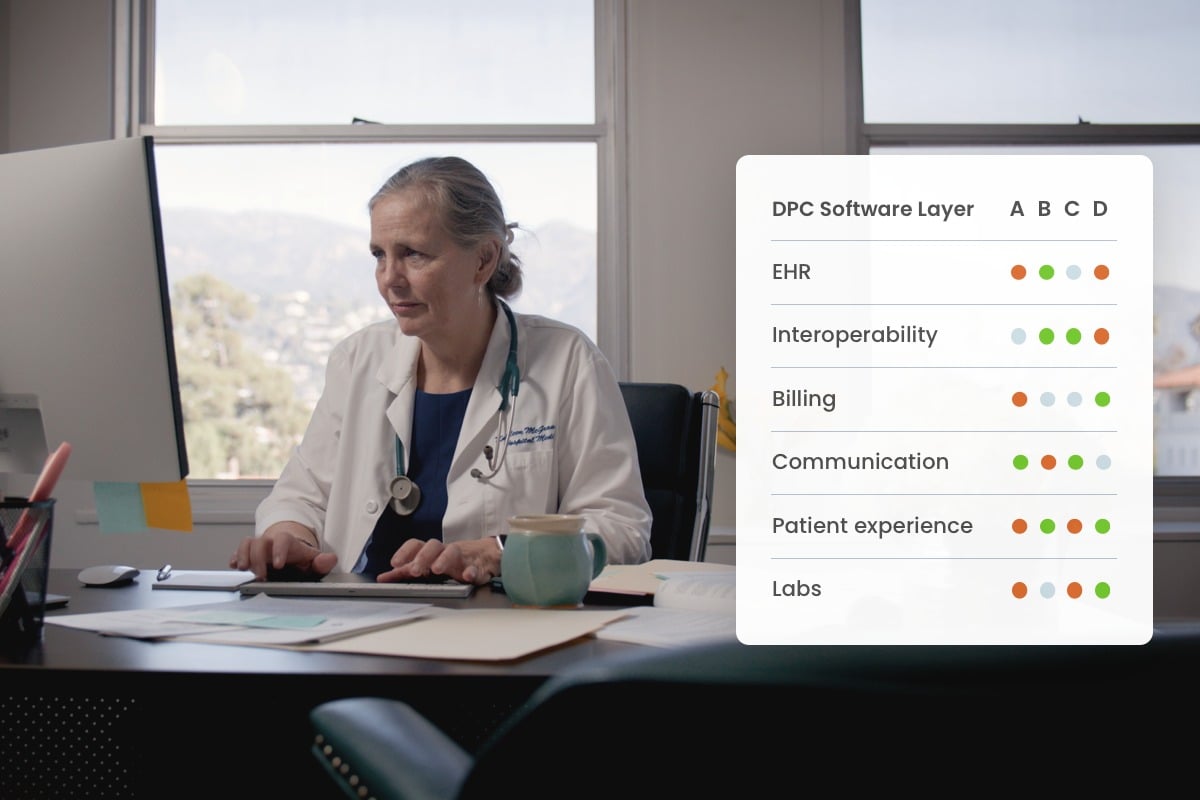
A DPC practice needs six software layers:
- An EHR built for direct care
- Interoperability, data management, and automation
- Membership and billing management
- Patient communication
- A patient experience platform
- A lab workflow
Most DPC practices that work with Guava rely on a combination of three to four platforms to cover their core software needs. This typically includes an EHR for clinical records, a membership billing platform (if not built into the EHR), a patient communication tool (if not bundled elsewhere), and Guava — used for health data management, admin automation, and delivering a premium patient experience.
DPC Software Layers Covered in This Guide
| Layer | What it handles | Covered in this guide |
|---|---|---|
| EHR / EMR | Charting, prescribing, orders, scheduling, clinical records | Elation, Cerbo, Hint, athenahealth |
| Interoperability, data management, and automation | Pulling in outside medical history and health data, search across records, document parsing, preventive care tracking, visit prep, HIPAA-compliant AI assistant | Guava |
| Membership and billing | Recurring membership charges, one-off charges, and employer plans | Hint, plus billing built into some EHRs like Cerbo or Elation |
| Patient communication | Secure messaging, calls | Spruce, EHR-native messaging, Guava, optional messaging for preventive care |
| Patient experience | A single place for patients to see their labs, records, and wearable data | Guava |
| Labs and outside records | Ordering, results, records from other systems | Direct lab contracts through the EHR |
It's also worth considering long-term scalability. The 2026 Direct Primary Care Trends Report, which draws on data from more than 2,700 clinicians, found DPC membership grew 837% per capita from 2017 to 2025, with patients engaging continuously throughout the year. Your stack needs to support both ongoing growth and that level of sustained patient engagement.
Best EHR for Direct Primary Care: What Providers Tell Us
The best EHR for direct primary care depends on how your practice is structured. Among the DPC practices Guava works with, some of the main EHRs are Elation, Cerbo, Hint Clinical, and athenahealth for larger or hybrid organizations. Each is built with particular types of practices in mind, so the useful question is not which is best overall, but which is designed for the way you want to work. The summaries below reflect provider feedback gathered by Guava's product team alongside what each company publishes.
EHR Comparison Table for DPC Practices
| EHR | Built for | Strengths practices point to | Other tools commonly used with this EHR |
|---|---|---|---|
| Elation | DPC practices specifically, as well as other clinical-first practices | Clean, intuitive interface organized around the longitudinal record and pure DPC workflows | A membership billing tool plus Guava for patient-facing experience and AI search across records |
| Cerbo | Functional medicine and DPC that want deep customization | Custom protocol support, fillable template forms, biomarker groups, efficient patient communication | Little else besides Guava for deeper patient engagement and data automation, since billing, scheduling, communication, and labs are built in |
| Hint | Practices that want billing and EMR in one place | Category-defining billing and a fast-moving product team | Depends on the plan. Hint Clinical combined with Hint Core covers most layers, while practices just using Hint Core for billing add an EHR, often a messaging tool (Spruce or Guava), and Guava as an AI layer for automation and analysis. |
| athenahealth | Practices with insurance volume, including hybrids and practices transitioning into DPC | Ability to scale and flexibility offered by third-party integrations with marketplace tools | Third-party marketplace integrations for DPC-specific billing, communication, scheduling, Guava for patient engagement plus AI search across records |
Elation
Elation supports over 50,000 clinical users and is the most common EHR among the DPC practices Guava works with. It's built specifically for DPC practices, and physicians report being particularly satisfied with its ease of charting. The interface is clean and quick to navigate, organized around a longitudinal patient record rather than episodic encounters. Elation also serves insurance-based primary care practices, making it a practical choice for practices transitioning gradually or keeping a fee-for-service panel alongside memberships.
Elation concentrates on the clinical record, so its tradeoff is that practices tend to pair it with more tools than a consolidated platform would require. Many run membership billing through Hint, though Elation offers its own billing product as well, covered below. Practices also add tools like Guava as a layer for the patient-facing experience and to search across records that originated outside the chart.
Elation is best suited for practices that want a DPC-native EHR organized around longitudinal care, or those managing a hybrid panel where some patients remain on insurance.
Cerbo
Cerbo is the EHR most closely associated with functional medicine, and clinician feedback explains why: it is deeply customizable. Flow sheets let practices build and name their own biomarker groups, something providers tell us they haven't found elsewhere in this space. That flexibility makes it a strong fit for practices running non-standard panels or protocols that don't map onto a conventional chart.
Practices that want to shape their own workflows get a great deal of value from Cerbo's customization. Although the configuration time is a real investment, some practices see this as the price of control. Verified user reviews on Software Advice highlight responsive support and intuitive scheduling alongside the notable learning curve.
Because features like subscription billing, scheduling, patient communication, and a lab workflow are built in, Cerbo practices tend to run a leaner setup than practices using other EHRs, then add Guava for the deeper patient-engagement and data automation layers.
Cerbo is best suited for functional medicine and integrative DPC practices that need custom protocol support, fillable template forms, and the ability to define their own biomarker groups.
Hint
Hint is the most widely used billing platform in DPC, and its EMR is now scaling quickly as well. Many of the DPC practices Guava works with who run memberships use Hint's billing platform, and both Guava’s product team and physicians report the team being helpful and responsive to community feedback.
Hint Clinical adds an EMR and communications on top of its billing foundation, aimed at practices that would rather consolidate than assemble a stack from separate vendors. It is the newer part of the product and has improved quickly, which has put it on the evaluation list for practices weighing whether to consolidate.
Hint is best suited for practices that want category-leading membership billing, or those looking to consolidate billing and charting under one vendor as the platform continues to expand.
athenahealth
Athenahealth is one of the largest EHR platforms in the US, built primarily for insurance-based practices. The base product is intentionally lean, with much of the functionality living within its marketplace integrations. This creates flexibility, which many DPC practices are drawn to. Practices can choose which tools they prefer for things like billing, appointment scheduling, patient communication, transcription, or patient engagement. While the need to evaluate and manage several vendors could be a tradeoff for some, others see it as a benefit.
The athenahealth platform also scales well, which matters for multi-provider groups running a direct care initiative alongside traditional primary care, or practices transitioning gradually from insurance to memberships. Its roots in insurance-based billing also shape the DPC experience: built-in billing workflows are designed around claims and payer requirements, which practices may need to adapt to their direct care model.
Documents from other facilities often arrive as PDFs, so many practices pair athenahealth with Guava to search and surface what they need across sources. Many athenahealth DPC practices Guava works with also pair it with Spruce or Guava for communication, Hint or another tool for membership billing, and Guava for data automation and patient engagement.
Athenahealth is best suited for practices that prioritize choice and customizing their workflow using third-party integrations. If using athenahealth for billing, multi-provider groups or hybrid practices that already carry significant insurance volume alongside their DPC panel are also a good fit.
Interoperability, AI Data Automation, and Prevention
Every EHR above does what it was designed to do: capture and organize the clinical record your practice creates. Three things fall outside that scope for all of them, and they’re particularly relevant for our DPC providers.
- Interoperability, or the health data that originates somewhere else. Records from other health systems, results from home test kits, standalone documents, and continuous data from wearables aren't part of what most EHRs were built to hold, so they arrive as sometimes unlabeled attachments or not at all. Enabling data portability through integrations with external health systems and third-party apps is key for DPC practices that want to provide comprehensive care and fully understand their patients' health.
- AI-driven medical data automation. Even with a patient's complete medical history, sorting through each source to find relevant information takes hours. Without the infrastructure to organize large amounts of data, that information is much harder to use.
- Preventive care tracking. The underlying data often lives in the chart, but a running list of which patients are overdue for which screenings is generally not a native view. EHRs are organized around what gets documented rather than what is coming next.
As EHRs are increasingly building their own AI features for note-taking, summarization, and workflow support, separate vendors are building AI outside the EHR for chart search, longitudinal review, patient messaging, and operational automation. The quality of any of these tools, however, depends on the breadth and cleanliness of the data they can access. If outside records, imaging reports, lab PDFs, wearable data, and patient messages remain fragmented, the AI layer will be fragmented too.
What is Guava's Provider Dashboard?
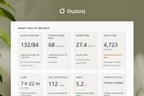
Guava’s Provider Dashboard is designed to address the gaps EHRs don't fill. Among the practices already using Guava alongside their existing EHRs, a few of its features tend to come up consistently in day-to-day use:
- Search across everything. Records, uploaded documents, and messages become searchable in one place, including material that arrived as a PDF from an outside facility.
- AI record parsing and patient portal integrations. Outside documents get parsed into usable information rather than sitting as unnamed attachments, which providers tell us saves real administrative time. On top of that, patients connect to external EHRs to integrate and organize their data into one timeline.
- Preventive health tasks. Health scores show what's completed and what's overdue, including screenings and vaccines, for both the patient and the provider.
- Visit prep and review. Highlights summarize what's changed since the last visit, and Ask Guava can pull answers from across sources: records, labs, wearables, messages.
- Clinician and patient summaries. Branded, customizable summary templates let clinicians generate polished, ready-to-distribute summaries of patient medical histories, trends in lab and wearable data over time, items to pay attention to, and more.
- Lab trends. Clinicians pull up biomarker and lab trends within visits to review with patients, which has been popular on both sides of the exam table. Lab data is unified and normalized, allowing practices to visualize trends over time.
- Patient-generated context. Wearable data, home test results, and lifestyle information rarely have anywhere to live in an EHR organized around structured clinical fields. For DPC practices doing preventive and longitudinal work, that context is a key differentiator.
Simply put, Guava's job is to reduce cognitive load for the provider, their team, and the patient.
How Patients Bring in Data from Outside Your DPC Practice
Your EHR integration is only one of the ways data reaches Guava. Patients can connect their other patient portals directly, independently of whatever system your practice runs on.
A patient can link the portals of health systems they have seen elsewhere, so records from a previous primary care physician, a specialist, or a hospital flow in without your staff having to request and scan them. These integrations include portals running on Epic, Cerner, Meditech, and more. They can connect wearables and third-party health apps for continuous data between visits, and they can add results from home testing or one-off visit summaries. For a DPC practice, the practical effect is that a new member arrives with a fuller history than an intake form would capture, and your staff did not spend administrative time assembling it.
The two paths work together: your EHR integration keeps the clinical record you create in sync, and patient-side connections fill in everything that happened outside your walls to ensure your AI tools have a complete, accurate record to work with.
Working Alongside Your Existing DPC Tools
Guava also connects with tools DPC practices already use. Practices tracking body composition can connect InBody devices, so those results land alongside labs and biomarkers rather than living in a separate system. For practices that would rather not switch between browser tabs, Tabflows lets you open Guava directly within your EHR, which matters when moving quickly through a day of visits.
For practices who use Spruce for messaging, Guava offers a direct integration, allowing you to view and search Spruce messages directly in Guava.
Membership Billing and Practice Management for DPC
Billing is the layer DPC practices can least afford to improvise. There are no insurance claims to file, but there are recurring charges, plan changes, and one-off transactions to handle. Standalone membership billing is a narrow field, so for most practices the real question is whether billing runs inside the EHR or alongside it.
Hint Core is the primary standalone DPC billing tool in the space. It pairs easily with whatever EHR a practice already uses, which is why many practices we work with run billing through it. Cerbo and Hint Clinical take the other approach and builds subscription billing into the EHR itself, which suits practices that would rather consolidate. Elation also has its own billing product that's worth a look for hybrid practices since it handles both subscriptions and traditional insurance claims.
Whichever direction you go, it is worth walking through your specific scenarios with the vendor: how recurring charges and mid-cycle plan changes are handled, whether family and employer plans are supported the way you need, and how one-off charges for labs, procedures, or dispensed medications flow through.
Patient Communication & Automated Reminders
Patient communication is the backbone of any DPC practice. Spruce is a robust, well-liked option among physicians with whom Guava works. Spruce offers secure texting, calling, and fax in one HIPAA-compliant inbox, along with phone trees, voicemail transcription, e-fax, video visits, shared team inboxes, and after-hours routing. For a practice that wants one place for multiple communication channels, it is a strong option.
Guava also includes secure patient messaging, though it's deliberately simpler: message threads tied to the patient's health data rather than a full communication suite. Practices that need robust phone, fax, and SMS infrastructure will want Spruce, which is why Guava integrates with it. Practices whose communication needs are mostly messaging, and who would rather consolidate, can handle it in Guava. Messages from both Spruce and Guava are surfaced in AI highlights when relevant and can be queried directly using the AI assistant.
The advantage of messaging inside Guava is context. Patients use the app to log symptoms, track medications, and record what's changed between visits, so a message arrives in the same platform as the data behind it rather than as an isolated question. For a DPC practice built on continuous access, that can be the difference between answering a question and seeing a pattern.
Something worth planning for separately is automated reminders, or the “you are due for a screening” outreach that runs on its own rather than when someone remembers. That capability is thin across most EHRs and communication tools alike, so practices that want it typically add this as a dedicated patient engagement tool.
A Patient Experience Platform
For DPC practices built on continuous relationships, the patient-facing experience matters well beyond the visit. Patients need a single place to view their labs, records, wearable data, and health trends, and the ability to reach their provider when something changes.
Guava's patient app is built for this. Instead of piecing together their health picture from multiple portals and paper records, patients have one place to see their labs, trends, and history, including data from outside your practice, and to reach you when something changes. For patients, knowing their provider has the complete picture lessens the cognitive load of explaining health fluctuations between visits and gives them peace of mind that they’re getting the experience they’re paying for.
How DPC Practices Handle Labs, Imaging, and Outside Records
Elation, Cerbo, Hint, and athenahealth all support electronic lab ordering with major national labs like Labcorp, Quest, or Fullscript, and Cerbo adds integrations with many specialty labs used in functional medicine. Most practices that only use Hint for billing order labs through their paired EHR. If they use Hint’s EMR, they can order labs through a supported Hint partner. Beyond software, DPC practices typically set up a client account with their lab to get wholesale pricing and pass costs through to patients. Any lab without an electronic interface still runs on faxed requisitions and PDF results.
Lab ordering through an EHR covers what your practice generates, but outside records present a more complex challenge. These often arrive as unsearchable PDF attachments, or not at all.
Guava's Provider Dashboard addresses this by pulling results from EHR integrations, patient portals, CCDA files, and PDF uploads into a single longitudinal view with normalized units and reference ranges. Biomarker trends become visible across time, and providers can pull them up during a visit without leaving Guava.
Read more about how Guava unifies lab data from multiple sources.
The Bottom Line
As DPC continues to grow, the practices that thrive will be the ones that treat their tech stack as a living system. It should evolve alongside your patient panel, integrate new data sources without friction, and keep both providers and patients working from the same complete picture. If bridging those final gaps is your challenge, discover how the Guava Provider Dashboard can help.
FAQ
What is the best direct primary care software?
There is no single best option because DPC software is a combination of platforms rather than one system.
What is the difference between DPC software and a regular EHR?
DPC software typically drops insurance claims workflows entirely and centers on recurring membership billing and continuous patient relationships. Traditional EHRs like Epic and Cerner are organized around encounters, billing codes, and payer integrations, so DPC practices using insurance-oriented platforms often work around billing steps a cash-based practice doesn't need.
What is the top DPC software for membership-based practices?
That depends on whether you want billing to live inside your EHR or alongside it. Practices that prefer to keep them separate typically run a standalone billing platform like Hint Core next to whichever EHR fits their clinical workflow. This is also the usual setup for practices on athenahealth, since its billing is built around insurance claims rather than recurring memberships. Practices that would rather consolidate can look at Hint Clinical, Cerbo, or Elation, all of which build subscription billing into the EHR.
How do DPC practices integrate wearable and lab data?
The EHR handles labs that the practice orders. Wearable data, home tests, and records from other health systems need a separate layer that connects those sources, which is what Guava does. Practices tracking body composition can also connect InBody devices and upload other DEXA and SECA scan results to track results over time.
Can patients connect their own records and wearables through Guava?
Yes, and this works independently of your EHR integration. Patients can link portals from other health systems they've used, connect wearables and health apps, and add home test results themselves. New members often arrive with a fuller history than an intake form would capture, and can use Guava to provide records without staff having to request and scan them.
What does direct primary care software cost?
Several DPC EHR vendors quote custom pricing, so it’s important to budget for the combination rather than one line item: EHR, billing (typically with per-transaction fees), communication, AI tools for data automation, and a high-quality patient experience.
Is direct primary care software HIPAA compliant?
HIPAA compliance depends on how a vendor operates, so it’s important to ask every vendor how data is encrypted, whether they sign a Business Associate Agreement, and how access to patient data is controlled and logged. The HHS HIPAA resources outline what to expect from a vendor.
For Guava specifically: data is encrypted at rest and in transit, and the platform uses modern cloud technologies built for HIPAA compliance. When partnering with covered entities or other business associates, Guava signs a Business Associate Agreement or Data Sharing Addendum as applicable to contractually ensure compliance. Full details are on our privacy and security page.
Additional Source:
- My DPC Story. The 2026 Battle of the Support Stack. The Toolkit, Ed. 5, Summer 2026.